
Thursday, March 26, 2015

Thursday, March 12, 2015
Mediums and Solvents

Earlier this week in class, some of us were discussing the way in which we like to use solvents and mediums to thin our oil paint. Our discussion led to the stability of paint when only using solvents to thin it. Everyone has their own preference for working with oils, but if you aren't sure how or why to use mediums and solvents, here is a good summary from Greg Kimsey and two videos from Douglas Farrick. Farrick's first video is about mediums and the second one has good safety information on solvents. Last, if you're really geeky and want to know about the molecular activity happening in oil paint and solvents, there is an article from the Smithsonian Libraries titled, "Oil Paints: The Chemistry of Drying Oils and the Potential for Solvent Disruption."
Oil Painting 101: Mediums - ART by Greg Kimsey
How to Create Oil Painting Medium(s) - YouTube
Artists Painting Solvents - YouTube
https://repository.si.edu/bitstream/handle/10088/20489/11.Tumosa.SCMC3.Mecklenburg.Web.pdf?sequence=1&isAllowed=y
Thursday, March 5, 2015
Visual Research

The class is starting to prepare for their final project and these are the steps/requirements that John has outlined for the project.
1. What is your image?
Find an image that you would like to work from and determine the size of your surface. Each student must have 3 to 4 manipulated versions of their photograph. John suggests altering your photo in photoshop with filters such as the 'artistic cutout' filter or the 'pixilated mosaic' filter to eliminate and simplify information. This will help you deconstruct the images and things you see in a deeper way.
2. Define your palette.
What is your goal for the final image? What kind of aesthetic do you want to explore? The type of palette you choose can help you reach the aesthetic goal you desire and will help communicate a mood and unify the image. We've discussed the Zorn palette quite a bit, but there are so many out there to choose from or that you can create on your own.
3. The final image must have evidence of your altered photos.
The image above shows John's process for creating visual research. He has taken a photo of a baby and then manipulated it in several ways - photoshoping, sketching and printing, drawing over his printouts with charcoal, collaging on the printouts, painting and collaging together. He has placed all the paintings he is working on and all the images he is working from together in a group so that he can analyze the types of visual trends that are occurring. By working on several paintings at once and then bringing them together like this, he is able to recognize a visual language, let each piece inform the other as they are created, and let the altered images inform the final work.
Can't wait to see what everyone develops!
Monday, February 23, 2015
Drawing into paint




.jpg)
.jpg)

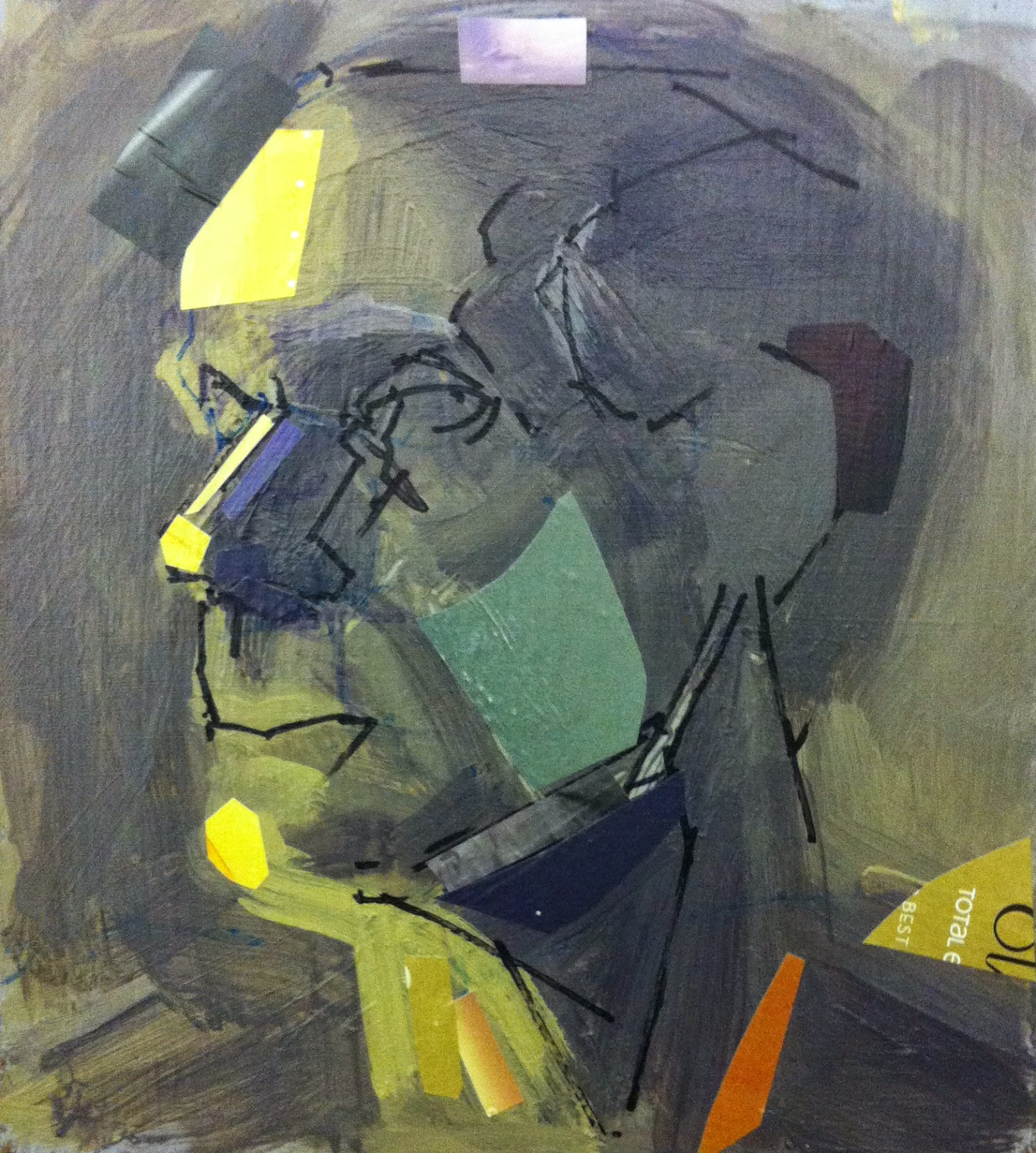
John challenged us to create a small painting with brushes that were too big. This forced us to make bigger and more general strokes to create the planes of the face. John also encouraged us to draw over our painting as we worked on them to reestablish the underlying architecture of the figure. You can see some of those results showing through beautifully in this series of images.
Thursday, February 19, 2015
Anders Zorn Palette

John showed the class a couple videos about Anders Zorn and John Singer Sargent. The Zorn video pointed out the type of limited color palette he used while making his oil paintings. His palette was mostly comprised of ivory black, yellow ochre, cadmium red and white. We implemented this in class and these are just a few of the color varieties we got. I will show the figure paintings everyone made in the next blog post. In the meantime, here are the links to the videos if anyone is interested.
Anders Zorn Sweden's Favorite Son - YouTube
The Daughters Of Edward Darley Boit By John Singer Sargent - YouTube
Thursday, February 12, 2015
Dave Dornan


John described a method his friend, Dave Dornan, uses to keep your eye moving through color placement. Dave will begin by starving the painting of color and work mostly in black and white. As he adds color, he triangulates the placement of primary colors to get your eye moving. I feel like the top image is a good example of this type color placement. His images aren't figure paintings, which is what we've been focusing on creating, but they are good reminders for color analysis. Keep in mind how much neutral and intense colors you want to exist in your image. The neutrals will always make your intense colors pop visually and hold the viewer's attention.
Mr. T doppelganger peels coconut with teeth

Andres Gardin is a coconut peeler in Panama has been peeling coconuts with his iron jaws since he was 11. He has peeled over 100,000 coconuts. Check out this article that was written about him and his attempt to get into the Guinness Book of World Records last year.
Andres Gardin, Panama Coconut Peeler, Attempts Guinness World Record - WITH HIS TEETH (VIDEO)
John compares painters to athletes. If you paint, you are an athlete so that means you need to prepare and train like one. Invest in studio time like Andres peels coconuts.
Subscribe to:
Posts (Atom)